



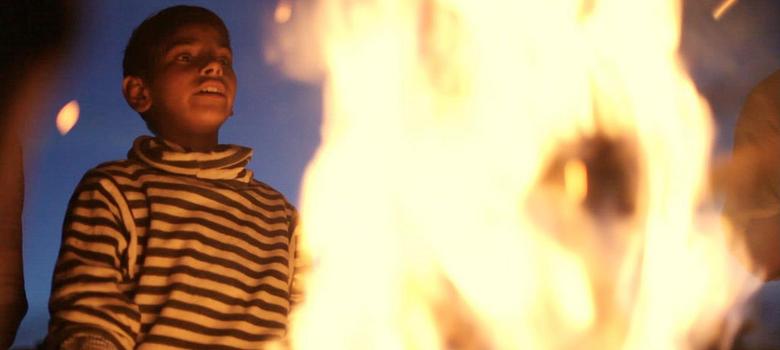
The Superstars of Koti is a minutely observed and accomplished debut documentary that regards the rocky passage from adolescence into adulthood through the prism of spiritual experience. Set in Koti village in Himachal Pradesh, the 75-minute documentary opens with a raucous Holi celebration and goes on to follow Kuldeep, Ramprakash and Devdass, whose experiences are mediated through their respective castes and economic backgrounds and relationship to the common god they worship. Will their Almighty, whom they worship with differing levels of passion, show the way and help them negotiate their dreams? Or, as the filmmakers ask in an introductory note, “As they clash in a flight of adolescent aspirations, will a coming of age entail harmony, or will equilibrium be restored by God’s own hand?”
The Films Division production will be screened in the Made in India section at the prestigious Hot Docs festival that will be held in Toronto between April 23 and May 3. Its immersive observational cinematography and meditative pacing draw us into the lives of not only the teenagers, but also the rhythms, beliefs and folklore of a village that is guided by the mysterious workings of its ruling spirit. Excerpts from an interview with Adlakha and Alam.
What took you to Koti, and what was it about the place and its people that captured your imagination?
Anuj: The idea behind the film, and more so, its narrative, developed over time. We heard about Koti from Farha’s uncle who lives in Dehradun, and ideas of deitydom and a faraway mountain culture caught our minds initially. We were in Koti a week later. It took us a while to absorb the small, quaint village enveloped by dense forests and a vast wilderness. We were very intrigued by the people, who worshipped an ancient mountain deity that defined their everyday lives and customs and spoke to them through seers possessed by its spirit. Life in the region essentially bore an omnipresent mark of the Devta.
The Superstars of Koti looks at the development of the boys through the local culture and religious leanings of the characters, which is an unusual approach for a coming of age film.
Anuj: The kids of the village were our first friends, and it was by spending time with them, listening to their stories of legends, spirits and the deity, that an amazingly rich sense of the place began to dawn upon us. What led us on was also our deep attachment for this formative age and the zest, imagination and intent that drives it. And so an idea which was a collective of many things, faith and childhood, social conditioning, adolescence and identity was born, against the backdrop of an ancient mountain deity. We imagined the kids to carry the film entirely, take us wherever they wanted and talk to us the way they liked. So the religious and the divine became rooted in the everyday lives of the characters and came out through the most ordinary moments.
We initially see a bunch of kids from different but inter-liked backgrounds, and the truth about their individual orientations, especially about caste and their feelings about the deity, gradually comes to the fore. How was this revelation influenced by the time spent on making the documentary?
Anuj: As our friendship grew over time, the boys grew more and more frank with us, which not only helped us film intimately but also stick to a purely fly-on-the-wall, observational shooting style. The hardest part was developing the narrative at the edit table, where we have interwoven three lives, very distinct from each other, with all eyes for the energies, fantasies and trials and tribulations of adolescence, connected through a thread that binds them in the first place, which is the Devta.
The film has been shot over two and a half years. We made frequent trips from Delhi, usually with Farha shooting and I recording sound. The boys evolved tremendously with us, emotionally and comfort-wise, giving us different trajectories of their lives every time we went. The film is therefore also like a little epoch, woven out of the everyday in the lives of the boys over time, their reflections and a coming of age.
The documentary suggests a shoot that has happened over a period of time and has been distilled into its essence.
Farha: We chose to make an ethnographic film but happened to stitch a simple narrative about three boys in a Himalayan village. And of course this wasn’t magical or destined! Because in a film one gets close to their own selves too and gets attracted to what they prefer or stand for. The boys too chose us over other characters that we’d thought of assembling. So we chose the subject, the idea but the story only hit us over time.
Anuj: Kuldeep’s stoic estrangement with his roots, Devdass’s immovable faith that makes him and breaks him every day and Ramprakash’s larger than life delirium that searches within for an anchor were mirrors in which we saw our experiences. Hierarchies and caste only became important as they emerged out of individual interpretations of the deity’s word, and its role in shaping aspirations, identity and relationships. It wasn’t the premise of the film when we started shooting. However, over time, realities continued to become more empathetic. That intimacy helped in shaping the film’s narrative.
How did Koti itself influence the way the film is paced and narrated?
Anuj: The visual treatment of the film is very raw, where the camera runs, jumps and swings with the kids, following them everywhere. We see, feel and hear Koti through them, weaving their dynamism, stories and chores with the life in the village. The narrative hence does not acquire its pace from Koti but its superstars, who take us though the time, people, faith and festivity that have shaped the village and continue to.
How did you rope in Films Division as the producer?
We had been to Koti a couple of times and were doing preliminary research for several months when the issue of funding the project began to seem critical to continue filming. Talks with a few producers and Indian TV channels did not produce any significant results, and we fortunately came across Films Division’s open call for proposals. Our application was accepted, and after a couple of pitch screenings, FD decided to come on board as a producer. They have been really open and forgiving towards us and let us take our time. They never, ever interfered with any creative process and we always received great feedback.
We welcome your comments at
letters@scroll.in.
The Films Division production will be screened in the Made in India section at the prestigious Hot Docs festival that will be held in Toronto between April 23 and May 3. Its immersive observational cinematography and meditative pacing draw us into the lives of not only the teenagers, but also the rhythms, beliefs and folklore of a village that is guided by the mysterious workings of its ruling spirit. Excerpts from an interview with Adlakha and Alam.
What took you to Koti, and what was it about the place and its people that captured your imagination?
Anuj: The idea behind the film, and more so, its narrative, developed over time. We heard about Koti from Farha’s uncle who lives in Dehradun, and ideas of deitydom and a faraway mountain culture caught our minds initially. We were in Koti a week later. It took us a while to absorb the small, quaint village enveloped by dense forests and a vast wilderness. We were very intrigued by the people, who worshipped an ancient mountain deity that defined their everyday lives and customs and spoke to them through seers possessed by its spirit. Life in the region essentially bore an omnipresent mark of the Devta.
The Superstars of Koti looks at the development of the boys through the local culture and religious leanings of the characters, which is an unusual approach for a coming of age film.
Anuj: The kids of the village were our first friends, and it was by spending time with them, listening to their stories of legends, spirits and the deity, that an amazingly rich sense of the place began to dawn upon us. What led us on was also our deep attachment for this formative age and the zest, imagination and intent that drives it. And so an idea which was a collective of many things, faith and childhood, social conditioning, adolescence and identity was born, against the backdrop of an ancient mountain deity. We imagined the kids to carry the film entirely, take us wherever they wanted and talk to us the way they liked. So the religious and the divine became rooted in the everyday lives of the characters and came out through the most ordinary moments.
We initially see a bunch of kids from different but inter-liked backgrounds, and the truth about their individual orientations, especially about caste and their feelings about the deity, gradually comes to the fore. How was this revelation influenced by the time spent on making the documentary?
Anuj: As our friendship grew over time, the boys grew more and more frank with us, which not only helped us film intimately but also stick to a purely fly-on-the-wall, observational shooting style. The hardest part was developing the narrative at the edit table, where we have interwoven three lives, very distinct from each other, with all eyes for the energies, fantasies and trials and tribulations of adolescence, connected through a thread that binds them in the first place, which is the Devta.
The film has been shot over two and a half years. We made frequent trips from Delhi, usually with Farha shooting and I recording sound. The boys evolved tremendously with us, emotionally and comfort-wise, giving us different trajectories of their lives every time we went. The film is therefore also like a little epoch, woven out of the everyday in the lives of the boys over time, their reflections and a coming of age.
The documentary suggests a shoot that has happened over a period of time and has been distilled into its essence.
Farha: We chose to make an ethnographic film but happened to stitch a simple narrative about three boys in a Himalayan village. And of course this wasn’t magical or destined! Because in a film one gets close to their own selves too and gets attracted to what they prefer or stand for. The boys too chose us over other characters that we’d thought of assembling. So we chose the subject, the idea but the story only hit us over time.
Anuj: Kuldeep’s stoic estrangement with his roots, Devdass’s immovable faith that makes him and breaks him every day and Ramprakash’s larger than life delirium that searches within for an anchor were mirrors in which we saw our experiences. Hierarchies and caste only became important as they emerged out of individual interpretations of the deity’s word, and its role in shaping aspirations, identity and relationships. It wasn’t the premise of the film when we started shooting. However, over time, realities continued to become more empathetic. That intimacy helped in shaping the film’s narrative.
How did Koti itself influence the way the film is paced and narrated?
Anuj: The visual treatment of the film is very raw, where the camera runs, jumps and swings with the kids, following them everywhere. We see, feel and hear Koti through them, weaving their dynamism, stories and chores with the life in the village. The narrative hence does not acquire its pace from Koti but its superstars, who take us though the time, people, faith and festivity that have shaped the village and continue to.
How did you rope in Films Division as the producer?
We had been to Koti a couple of times and were doing preliminary research for several months when the issue of funding the project began to seem critical to continue filming. Talks with a few producers and Indian TV channels did not produce any significant results, and we fortunately came across Films Division’s open call for proposals. Our application was accepted, and after a couple of pitch screenings, FD decided to come on board as a producer. They have been really open and forgiving towards us and let us take our time. They never, ever interfered with any creative process and we always received great feedback.
